Why This Matters
For families and businesses across the Gulf, a United States–Iran agreement would be more than a foreign-policy headline.
It could affect the price of fuel, the availability of imported goods, flight schedules, government revenue, business confidence and hiring. But these effects would not arrive together. Financial markets can react to a sentence. A tanker operator needs a safe route, an insurer willing to cover it and a port ready to receive it. A supermarket must wait for cheaper stock to move through the supply chain before changing shelf prices.
That difference in timing matters. A deal could create immediate relief without producing immediate normality.
As of 24 September 2026, the United States and Iran have resumed indirect diplomacy, but officials say the two sides remain far apart. No formal agreement or ceasefire had been announced. Iran has indicated that the Strait of Hormuz could reopen within days if the United States eases military pressure and removes its blockade, but those conditions have not been agreed.[1][2]
This article is therefore a scenario analysis, not a prediction that an agreement is imminent.
Key Points
- Oil prices and Gulf financial markets would probably react first, before physical trade fully recovers.
- The most important test would be verified, sustained commercial passage through the Strait of Hormuz—not the announcement itself.
- Marine insurance and freight costs could fall quickly, but only after insurers and shipowners believe the security improvement will last.
- Flight schedules may improve relatively early, while passenger confidence and ticket prices could take longer to normalize.
- Food, consumer goods and construction inputs would respond with a lag because expensive inventory is already inside the system.
- Qatar and other energy exporters could regain revenue and fiscal room, but damaged infrastructure and delayed projects would not restart overnight.
- A limited agreement that leaves sanctions, inspections, missiles or maritime enforcement unresolved could produce relief followed by renewed volatility.
The First Reaction: Oil and Financial Markets
The first visible change would probably appear on trading screens.
Oil prices already move sharply when negotiations appear more or less likely. On 22 September, crude prices fell as Middle East flows improved and markets looked ahead to possible US–Iran talks. A day later, oil rose by about 4% after Iran’s president rejected surrender and uncertainty returned.[3][4]
That tells Gulf residents something important: the market does not wait for cargoes to arrive. It prices the probability of future supply.
If the parties announced a credible agreement that included a ceasefire, reduced military pressure and a workable plan for Hormuz, the geopolitical premium in oil could fall quickly. Gulf equity markets, airlines, shipping companies and other risk-sensitive assets could also respond.
But a lower oil price would create mixed effects inside the GCC.
For households and businesses, cheaper energy could eventually reduce transport and imported-goods pressure. For oil-exporting governments, a sharp fall in prices could limit part of the revenue gain from restoring export volumes. Qatar would benefit mainly from the recovery of LNG flows and shipping reliability, while Saudi Arabia and the UAE have more pipeline capacity to bypass Hormuz than Qatar or Kuwait.
The first market move would therefore be relief—not proof that the regional economy had fully recovered.
The Real Test: Ships Moving Through Hormuz
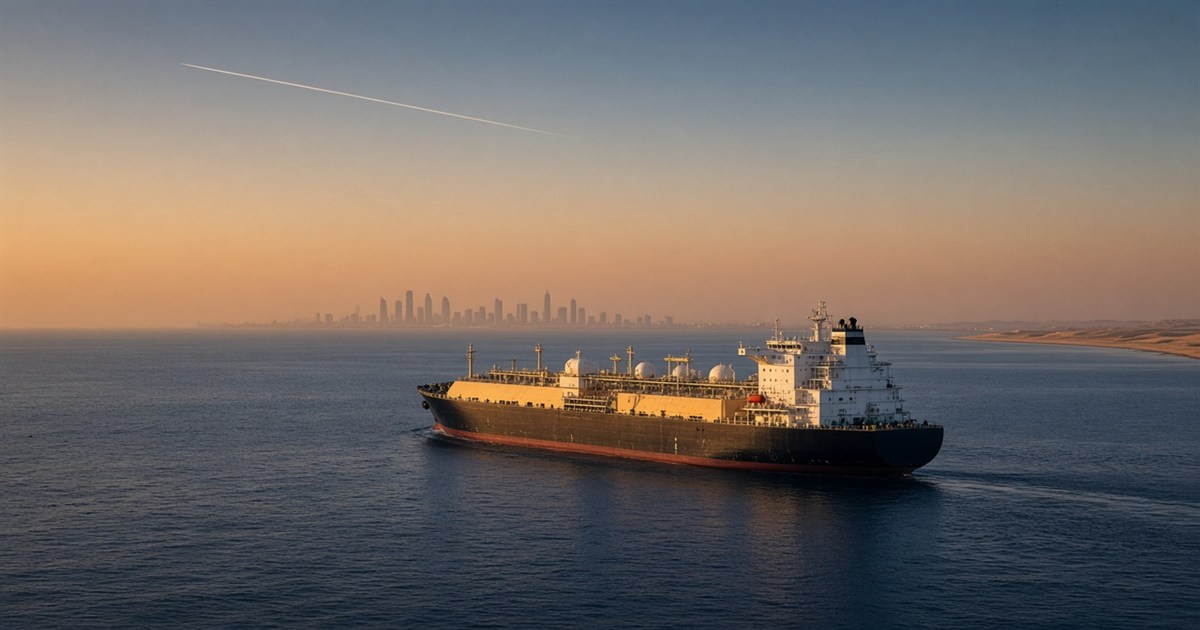
The Strait of Hormuz is the central economic test because it normally carries roughly one-fifth of global petroleum liquids consumption and more than one-fifth of global LNG trade.[5]
On 28 August 2026, the International Maritime Organization said the crisis remained unresolved and that as many as 400 ships carrying about 6,000 seafarers had been unable to leave the Gulf safely.[6] On 16 September, the IMO said it had verified 80 attacks on international shipping since the conflict began.[7]
For that reason, a political announcement would not be enough. Shipowners would look for operational evidence:
- Are both inbound and outbound commercial lanes open?
- Have mines, damaged vessels and other navigational hazards been addressed?
- Are ships required to seek special authorization or pay disputed transit charges?
- Are naval escorts, port procedures and crew-safety guarantees clear?
- Do transits continue for several weeks without a new attack?
This is where the difference between a ceasefire and a durable commercial settlement becomes visible.
Iran has said it could reopen the strait within seven days under certain US concessions. Yet previous attempts at partial reopening left approval requirements, safety concerns and enforcement disputes unresolved.[2][8]
The most useful evidence would not be a speech. It would be tanker counts, container-ship movements, successful LNG departures and insurers returning to the route.
Insurance and Freight Could Improve Next
Once ships begin moving safely, marine insurance would become one of the fastest transmission channels into business costs.
War-risk premiums react to perceived danger. During the short Israel–Iran ceasefire in June 2025, Gulf shipping insurance premiums softened, although they remained above earlier levels.[9] That episode does not prove how the current, more severe disruption would unwind, but it shows that insurance can respond before supply chains fully normalize.
Freight costs could also fall as direct routes reopen and emergency workarounds become less necessary. During the present disruption, producers have used expensive ship-to-ship transfers near Oman to keep some oil moving. Reuters reported that September ship-to-ship transfers near Oman were expected to reach about 2.5 million barrels a day, compared with Hormuz loadings of about 6.5 million barrels a day, while tanker costs exceeded $30 per barrel on some routes.[10]
A workable agreement could remove part of that extraordinary cost. However, ship availability, crew positioning, port congestion and accumulated cargo backlogs would remain. Insurers may also keep a risk premium until the ceasefire has survived political disputes and isolated security incidents.
This means freight could become cheaper before it becomes cheap.
Flights May Return Before Travel Feels Normal
Airlines can often adjust faster than maritime supply chains. Once aviation authorities and carriers judge regional airspace to be safe, cancelled routes can be restored and some detours removed.
That would help Gulf hub airports, business travel, tourism, air cargo and families who have faced cancellations or costly replacement tickets. IATA reported in August that traffic through Gulf hubs was already on a recovery path, although Middle East international passenger demand remained below the previous year in July.[11]
Still, three different recoveries must be separated:
- Operational recovery: aircraft and crews return to normal routes.
- Commercial recovery: airlines rebuild schedules and seat capacity.
- Passenger recovery: travellers become confident enough to book again.
Airfares may remain elevated while capacity is rebuilt. Some aircraft and crews may be out of position, and airlines may keep contingency costs in their schedules. Air cargo could become cheaper, but companies that switched urgently from sea to air may not reverse those arrangements immediately.
The reopening of airspace would be a strong early signal. It would not mean every travel cost disappears at once.
Household Prices Would Be Slower to Fall
Consumers may expect a peace announcement to reduce prices quickly. In practice, the downward journey is usually slower than the upward one.
Retailers and distributors may still hold inventory purchased with expensive freight, insurance and emergency-routing costs. New lower-cost shipments must enter the system, clear ports and warehouses, and replace older stock. Contracts for transport, fuel or supply may reset monthly or quarterly rather than daily.
The sequence would look something like this:
Deal announcement → lower market risk → safer shipping → lower insurance and freight → cheaper replacement inventory → possible retail-price relief
Each arrow takes time, and the final step is not automatic. Businesses may use lower logistics costs to repair margins damaged during the disruption rather than immediately cutting prices. Currency movements, rent, wages and local competition will also matter.
Food and frequently replenished goods could show changes sooner. Furniture, electronics, vehicles, machinery and construction materials may respond later because their inventory and purchasing cycles are longer.
For households, the practical lesson is simple: falling oil prices are an early signal, not a supermarket receipt.
What Changes for Qatar?
Qatar has a particularly direct interest in any agreement because its LNG exports depend heavily on Hormuz. Before the conflict, around one-fifth of global LNG trade passed through the strait, primarily from Qatar.[5]
A durable reopening could restore cargo reliability, government revenue and confidence in Qatar’s role as a long-term supplier. It could also reduce pressure on aviation, imported goods and companies that depend on regional shipping.
But recovery would not be instantaneous. QatarEnergy has said that the crisis may delay later phases of the North Field expansion because of equipment-delivery disruption, even though the first train was still expected to begin in the first half of 2027.[12] Lost time, delayed components and damaged infrastructure do not disappear when diplomats sign a document.
For residents and local businesses, the improvement might therefore arrive in stages:
- Fewer flight and shipping disruptions.
- Better availability of imported goods.
- More predictable business planning and procurement.
- Gradual recovery in government and state-linked spending.
- Later improvement in hiring, contracts and household confidence.
The strongest immediate benefit may be predictability. Businesses can tolerate many costs better than they can tolerate not knowing whether a route, shipment or project will operate next week.
Why a Deal May Not End the Economic Shock
The word “deal” can describe very different outcomes.
A narrow agreement might reopen Hormuz while leaving sanctions, Iran’s nuclear program, missile capabilities, port inspections and regional armed groups unresolved. Gulf governments have previously argued that an agreement should do more than end the fighting: it should also reduce the risk that missiles, drones or energy routes are used again as instruments of pressure.[13]
There are at least three possible paths:
1. Durable settlement
Shipping resumes, attacks stop, insurance normalizes and sanctions relief is implemented through verifiable steps. This would offer the strongest basis for recovery.
2. Limited transactional agreement
The parties exchange specific concessions and reopen key routes, but larger security disputes remain. Markets improve, yet businesses continue paying a risk premium.
3. Temporary pause
The announcement reduces immediate tension, but enforcement breaks down or either side claims the other failed to comply. Oil, freight and financial markets reverse sharply.
The second path may be the most difficult for households to interpret. Conditions would be better than during open conflict, but not stable enough for companies and governments to behave as if the risk had disappeared.
A Five-Signal Gulf Deal Test
Instead of judging an agreement by its headline, Gulf residents and businesses can watch five practical signals.
1. Hormuz traffic
Are oil tankers, LNG carriers and container ships completing normal passages consistently?
2. War-risk insurance
Are premiums falling for several weeks, and are major insurers expanding coverage?
3. Airline capacity
Are regular schedules returning without repeated cancellations or emergency rerouting?
4. Port and inventory conditions
Are delivery times, shortages and freight surcharges improving for ordinary goods—not only energy cargoes?
5. Business decisions
Are government tenders, corporate projects, hiring and supplier contracts restarting?
These signals separate political relief from economic recovery. If only oil prices move, the agreement may still be mostly a market story. If ships, aircraft, cargo, contracts and hiring improve together, the recovery is becoming real.
Takeaways
If Donald Trump and Iran reach an agreement, the first change across the Gulf would probably be sentiment: oil, equities and expectations would move almost immediately.
The next stage would be operational. Ships would need to transit Hormuz safely, insurance would need to become available at lower cost, and airlines would need to restore reliable schedules.
Household relief would come later. Cheaper freight must work through inventory and distribution before it can affect everyday prices. Government budgets, delayed projects and employment may take longer still.
The central question is therefore not simply whether Washington and Tehran announce a deal. It is whether the agreement creates a secure and durable operating environment for the Gulf.
A headline can change the price of risk. Only sustained implementation can change the cost of living.
Cross Border Money Lab provides educational and general information. It does not provide individualized financial, investment or legal advice.
Related Reading
- Qatar Is Training 50,000 People for the AI Age. What Does It Mean for Expats and Entrepreneurs?
- The Fed Raised Rates. Why GCC Mortgages, Deposits and Small Businesses Feel It So Quickly
- When Hormuz Disrupts Oil: How Inflation Travels Across the World—and Into Your Money
Sources
- Reuters — Iran, US still far apart in peace talks, Iranian official says, 23 September 2026.
- Reuters — Iran ready to reopen Strait of Hormuz if US eases military pressure and lifts blockade, 22 September 2026.
- Reuters — Oil prices settle lower as crude flows from Middle East improve, 22 September 2026.
- Reuters — Oil settles up around 4% as Iran’s president vows to never surrender, 23 September 2026.
- U.S. Energy Information Administration — World Oil Transit Chokepoints, last updated 3 March 2026; accessed 24 September 2026.
- International Maritime Organization — Six months of uncertainty for seafarers in Strait of Hormuz, 28 August 2026.
- International Maritime Organization — Stop attacking merchant ships and seafarers, 16 September 2026.
- Reuters — Ships crossing Hormuz need OK from IRGC, unfreezing funds part of deal, Iran official says, 17 April 2026.
- Reuters — Gulf shipping costs drop as Israel-Iran ceasefire holds, 26 June 2025.
- Reuters — Hormuz shuttles keep oil flowing, but at a high cost, 21 September 2026.
- International Air Transport Association — Air Passenger Demand Grows 0.2% in July, 31 August 2026.
- Reuters — QatarEnergy says Hormuz crisis may delay LNG expansion projects, 21 September 2026.
- Reuters — Gulf states tell US ending the war is not enough, Iran’s capabilities must be degraded, 27 March 2026.

