AUDIO INSIGHT BRIEFING
Listen to the key implications in under three minutes (2:00).
READ THE FULL ANALYSIS BELOW ↓
Why This Matters
A car that briefly leaves the ground is easy to imagine as freedom. A shorter commute, an escape from traffic, perhaps a completely different relationship with the road.
Tesla’s latest Roadster demonstration does not establish those everyday benefits. It does offer a useful starting point for thinking about them. The question for a future owner is how much of a vehicle’s capability can become a reliable part of life, and what that freedom will cost.
You can admire the engineering, want the experience and still distinguish it from a practical transport purchase. That distinction becomes even more useful when deciding whether an exciting automotive story supports an investment.
Key Points
- Demonstrated capability, permitted use and dependable daily transport are different stages.
- Driving pleasure is a legitimate benefit. It deserves a recreation budget rather than an invented commuting saving.
- Insurance matters through its coverage, exclusions and recovery arrangements, as well as its price.
- Automation and aerial capability are separate technologies. Progress in one does not prove the other is ready.
- A compelling vehicle can attract attention before its production economics or contribution to company earnings is established.
What the Roadster Demonstration Actually Tells Us
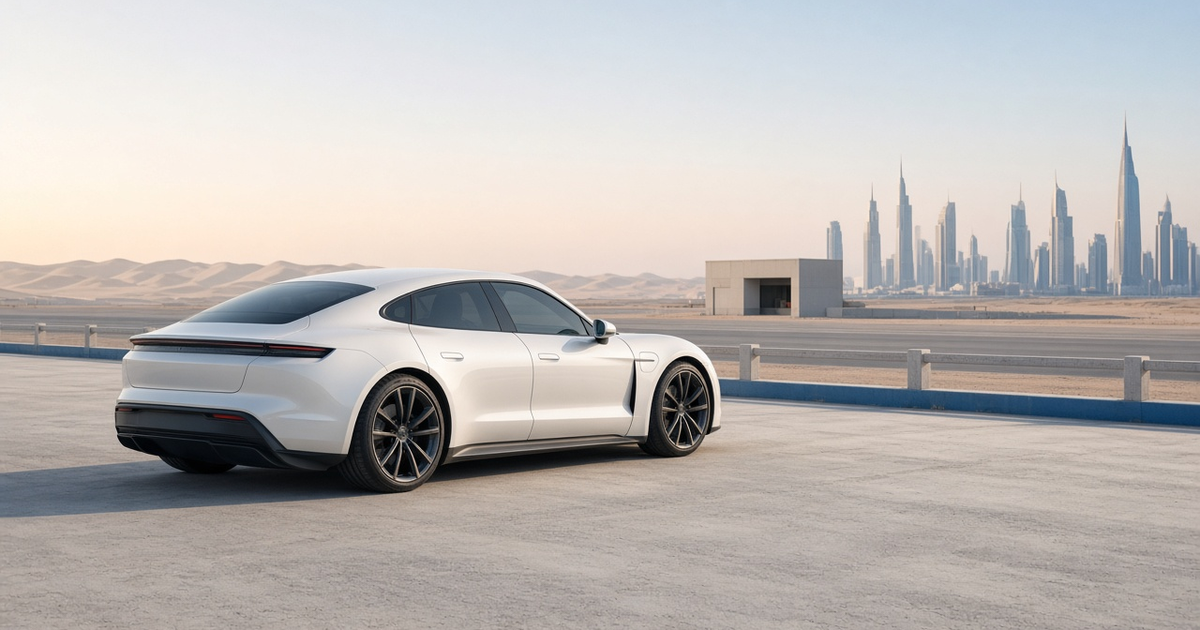
Reuters reported that Tesla demonstrated a redesigned Roadster on October 15, using a suction system and thrusters for manoeuvres including an airborne turn. Tesla said production would begin in 2028. That is a company target, not a guaranteed delivery date.
The National’s October 17 article examined the questions surrounding the demonstration, including permission and insurance. Tesla’s UK Roadster page includes configuration- and region-specific availability qualifications. Those qualifications do not establish permission for the intended use in a buyer’s own market.
Those facts leave several questions open. This article does not establish that a Roadster can be used for routine aerial commuting, that a particular configuration is approved in Qatar or the UAE, or that insurance for a particular use is available. It also does not establish that a pilot’s licence is universally required. Vehicle classification and operating permission need a specific answer from the relevant authority.
A demonstration shows what a machine can do under the conditions of the demonstration. Owning it introduces a larger system: roads or facilities, other people, maintenance, operating rules and responsibility when something fails.
The Optimistic Case: A More Capable Car Can Expand Choice
There is room for optimism without assuming a flying commute is around the corner.
Engineering demonstrations can broaden the questions manufacturers attempt to solve. Buyers may also value performance, design and an experience that earlier vehicles could not offer. Pleasure, curiosity and craftsmanship are real reasons people spend money.
The longer-term promise of future vehicles is wider access to useful movement. That could involve easier driving, less effort or journeys that are currently difficult. These are possibilities to test through the relevant technology, rather than benefits already demonstrated by Roadster.
In particular, a car’s propulsion or handling does not tell us how independently it can navigate. A driver-assistance feature, an autonomous transport service and an aerial manoeuvre need separate evidence. Bundling them into one image of “the future car” makes it harder to judge what is actually improving.
For an ordinary household, the strongest progress may eventually feel unremarkable: a journey that is consistently easier, a vehicle that is available when needed, or less dependence on another person to travel. Those outcomes would need evidence of safe operation, access and affordability.
The useful optimism is a willingness to test whether new capability expands those choices.
The Constraint: Your Freedom Must Fit Around Everyone Else’s
A vehicle operates among people who did not choose to buy it.
That changes the meaning of freedom. An owner’s ability to perform a manoeuvre must coexist with the safety of pedestrians, nearby drivers, passengers and people maintaining the vehicle. A controlled demonstration cannot settle that wider question.
Permission is therefore part of the product’s practical value. A feature usable only at a specialist facility provides a different benefit from one permitted on an everyday route. Both may have value, but they belong in different decisions.
For a GCC resident, availability elsewhere would leave the local question unresolved. Before committing money, the relevant evidence would concern the exact vehicle configuration, intended activity and jurisdiction. A general announcement about advanced mobility would not answer those specifics.
Restrictions might narrow a feature’s use. They can also create the conditions under which other road users, insurers and facility operators can accept it. Treating every rule as an obstacle misses that role.
Driving May Become Easier While Ownership Becomes More Demanding
Consider a future car with sophisticated automated functions. In a hypothetical system, the driver could have less to do during a permitted journey, while the owner still has responsibilities around servicing, software status and the conditions under which functions may be used.
That is a scenario about future vehicle ownership, not a description of Roadster’s confirmed automation features or a statement of current law.
It exposes a useful distinction: reduced effort at the wheel does not automatically mean reduced responsibility for the vehicle.
Before treating a new feature as convenience, a buyer needs to know what happens when it becomes unavailable. Can the planned journey still be completed? Is another vehicle needed? Who diagnoses a fault, and where can a repair take place?
A capability used occasionally can still be enjoyable. A capability relied on for work or family travel needs a dependable fallback. The consequence of downtime changes with the job the car is supposed to do.
Insurance Turns Technical Questions into Household Exposure
The price of a policy is only one part of the answer.
The more revealing question is whether the intended activity is covered in writing. Road use, a private-facility experience and any aerial operation should not be assumed to share the same cover. The exact policy and applicable rules must resolve that point.
A prospective owner would also need to understand damage to the vehicle, liability to other people, recovery and repair arrangements, and any replacement transport. These are questions for an actual insurer and contract, not grounds for declaring the car uninsurable.
Responsibility after an incident may involve the driver, manufacturer, a service provider or another party. It cannot be assigned in advance from a demonstration video. Evidence, contracts and the applicable legal framework would matter.
For household finances, the practical issue is the exposure left after the policy has done what it promises. An affordable premium offers limited reassurance if the use you paid to enjoy is excluded.
Three Hypothetical Futures, Three Different Purchases
The following scenarios are analytical comparisons, not forecasts or confirmed Roadster sales conditions. They assign no probabilities. Each considers the first year after a buyer could actually take delivery in their market.
Scenario 1: The Special Feature Is a Facility Experience
Assumption: The relevant feature is permitted and insured only at an approved specialist facility, and the owner has access to that facility. Ordinary transport is handled separately.
The buyer is purchasing recreation and a distinctive experience. Facility access, transport to the venue, maintenance and actual usage determine the value received.
The financial question is how much the owner is willing to spend on that experience. A claimed saving from avoiding traffic would have no place in this comparison.
What would change the analysis: Written permission for wider use, actual facility terms, insurance wording and records of how often the owner can realistically attend.
Scenario 2: A Feature Becomes Useful on Specific Journeys
Assumption: A relevant feature has the required local approval, insurance and service support for a clearly defined use. We do not assume this means flying over public traffic.
The buyer can compare its benefit on journeys they actually make. A time saving matters only if it survives restrictions, access arrangements and downtime. It is not automatically extra income.
The financial question is the additional cost for the usable benefit, including fallback transport. A feature that saves effort may justify a premium even when it creates no cash saving; that preference should remain explicit.
What would change the analysis: Independent evidence from the approved use, the exact operating limits, repair turnaround and the owner’s actual journey pattern.
Scenario 3: Delivery or Local Availability Remains Uncertain
Assumption: A prospective buyer is asked to commit funds before delivery timing, local feature availability or service arrangements are sufficiently clear for their needs.
The buyer still needs transport in the meantime. Any commitment must be judged using the actual payment and refund terms. This scenario assumes neither a refundable nor a non-refundable deposit.
The financial question includes how long money could be unavailable, what can be cancelled and whether the buyer can comfortably continue with another vehicle. Waiting for clarity can have value because it preserves a choice.
What would change the analysis: A binding agreement, confirmed local availability, written refund terms, delivery evidence and a service network able to support that configuration.
Give the Money a Job Before Giving It to the Car
Before comparing specifications, finish this sentence: “I want this vehicle primarily for…”
If the answer is daily transport, judge dependable access, whole-journey convenience and total ownership cost.
If it is an unusual driving experience, judge enjoyment, access and affordability within discretionary spending. There is no need to disguise pleasure as productivity.
If the answer is an investment thesis, a separate set of evidence is required. Customer excitement must translate into deliveries and revenue, while development, manufacturing, warranty and support costs affect the result. Brand attention may have value, but attributing future sales or profit to it requires evidence.
A simple ownership comparison can keep the decision grounded. Over the same period, compare purchase cost less a stated resale assumption, financing costs, insurance, maintenance, access or usage charges, and any additional transport needed. Keep the resale assumption visible; an unknown resale value is not a reliable source of affordability. Do not count loan principal again when the purchase price is already included.
Then write the expected benefit separately: journeys made easier, effort reduced or experiences enjoyed. That prevents a preference from quietly turning into an unsupported financial return.
Where Future Business Value Could Emerge
If sophisticated vehicles gain paying users, demand could develop around diagnostics, specialist maintenance, training, compliant facilities and insurance support. Those are conditional opportunity areas, not evidence of available contracts or attractive margins today.
A small operator would need to identify the payer, permitted service, required qualifications, equipment cost and repeat demand. A specialised workshop with too few customers can struggle even when the underlying technology works.
For an investor, the comparable discipline is to follow the path from demonstrated capability to approved product, delivered vehicles, paid use and sustainable earnings. Progress at one stage does not remove the need to fund or complete the next.
The Future Is Worth Watching Without Buying It All at Once
Roadster invites optimism about what engineers may make possible. The next task is turning capability into something an owner can use, maintain and afford under the conditions where they live.
The buyer’s decision is whether to pay for transport, an experience or an uncertain future option. The investor’s decision is whether evidence supports the business value being assumed. Neither requires dismissing the technology or accepting every promise attached to it.
The freedom worth paying for is the freedom you can actually use. Until its permissions, costs and support are clear, keeping your existing transport and your financial choices available can be a rational part of believing in the future.
Educational analysis only. This article does not establish vehicle approval, insurance availability or an individual investment recommendation.
Sources
- Alvin R Cabral, “Up in the air: Tesla’s ‘flying’ Roadster raises more questions than answers,” The National, 17 October 2026; accessed 18 October 2026.
- Abhirup Roy and Mrinmay Dey, “Tesla’s new Roadster turns in air with SpaceX thrusters, won’t land until 2028,” Reuters, dateline 15 October 2026; Euronext-hosted copy dated 16 October 2026; accessed 18 October 2026.
- Tesla, Roadster, United Kingdom product page, regional availability and configuration qualifications; accessed 18 October 2026. Manufacturer information, subject to change.

